DataLase enables high-contrast coding without inks or labels
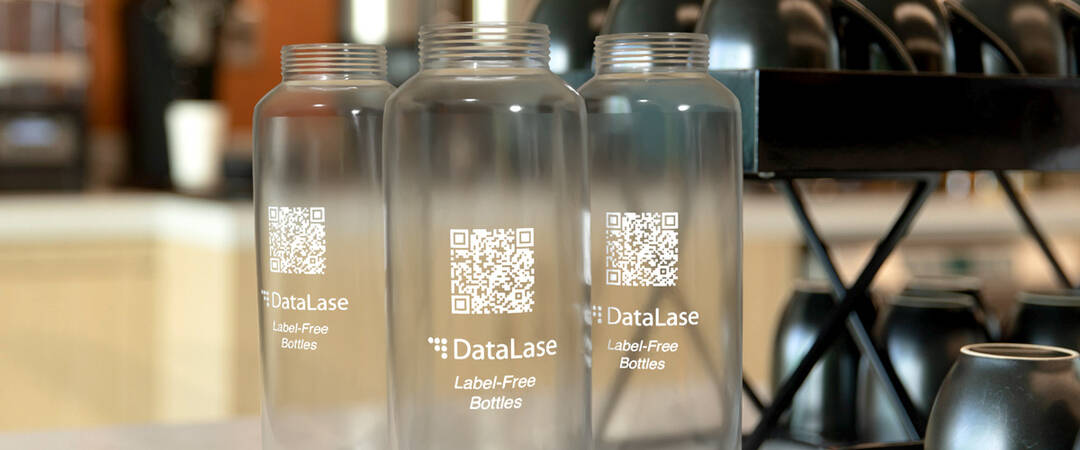



In a significant move for the circular economy, photonic printing specialist DataLase has unveiled its latest innovation: a clear-to-white laser-reactive coating designed to eliminate the need for traditional labels on plastic bottles.
For food and beverage professionals – particularly those in the water, dairy, and soft drink sectors – this development represents a major step forward in addressing the industry’s two biggest challenges: sustainability and operational efficiency.
Here is a breakdown of why this technology is poised to disrupt the bottling line.
Solving the recycling dilemma
The primary hurdle in PET recycling has long been the label. Physical labels, sleeves, and the adhesives used to attach them are often viewed as "contaminants" in the recycling stream, complicating the process of turning old bottles into high-quality rPET.
By applying a transparent coating directly to the bottle surface, DataLase allows brand owners to laser-mark essential data – such as expiry dates, batch codes, and even barcodes – directly onto the plastic. Because there is no secondary material (paper or plastic film) and no adhesive, the bottle is significantly easier to recycle.
From clear to high-contrast white
While laser marking on plastic is not new, achieving high contrast on clear PET has historically been difficult. Standard lasers often produce a "faint" or "etched" look that is difficult for consumers to read or scanners to pick up.
The new DataLase coating is transparent upon application. However, when struck by a CO2 laser, it undergoes a colour-change reaction to produce a crisp, high-contrast white finish. This ensures that critical regulatory information remains legible throughout the supply chain without compromising the premium "clear" aesthetic of the bottle.
Streamlining the production line
For operations managers, the transition to label-free technology offers several logistical advantages:
A "better-for-you" packaging strategy
As the food and drink industry faces increasing pressure from both regulators and "health-conscious" consumers to reduce plastic waste, the move toward "naked" packaging is gaining momentum.
DataLase’s technology allows brands to move beyond the traditional label while maintaining the "clean label" transparency that modern consumers demand. By integrating the branding and data directly into the vessel, companies can position themselves as leaders in the "better-for-you" beverage movement, proving that the next phase of the category will be won through smarter, leaner formulation – not just of the liquid inside, but of the package itself.